
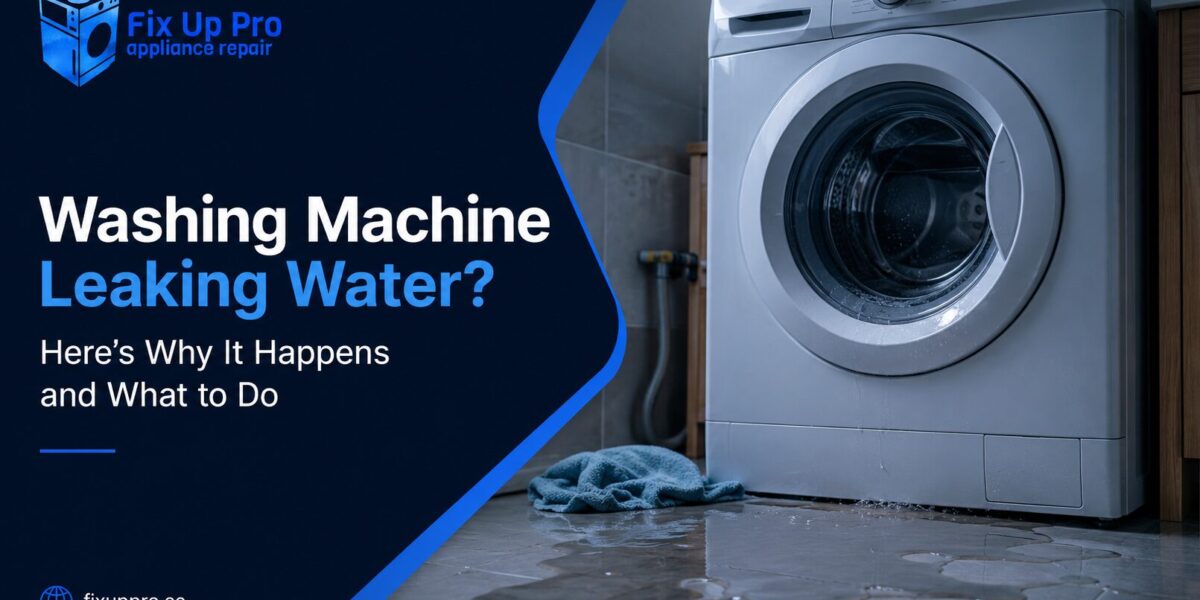
Water on the laundry room floor is one of those problems that’s hard to ignore — and easy to worry about. Is it something simple, or is the machine on its way out? In most cases, a leaking washing machine has a specific cause that can be identified and fixed without replacing the appliance.
We’ve repaired washing machines across Winnipeg for years, and leaks are one of the most common calls we get. Here’s a breakdown of what actually causes them — and what you can do about it.
First: where is the water coming from?
Before anything else, try to figure out where the water is appearing. Is it pooling directly under the machine, coming from the front, the back, or showing up during a specific part of the cycle? That information narrows things down considerably and helps a technician diagnose the issue faster if you do end up calling one in.
The location and timing of the leak are two of the most useful things you can observe before anyone looks at the machine.
The most common causes of a leaking washer
Loose or damaged inlet hoses
Two hoses connect your washing machine to the water supply — one for hot, one for cold. Over time, the connections at either end can loosen, the hoses themselves can crack or develop small splits, or the rubber washers inside the fittings can wear out and stop sealing properly.
Pull the machine away from the wall and inspect both hoses. Look for any visible cracks, bulging sections, or moisture around the connection points at the wall and at the back of the machine. If a connection feels loose, tighten it by hand first — sometimes that’s all it takes. If the hose itself is cracked or the fitting is corroded, the hose needs to be replaced.
Inlet hoses are inexpensive and straightforward to swap out. Most hardware stores in Winnipeg carry standard sizes, and replacing them is a reasonable DIY task for most homeowners.
Clogged or kinked drain hose
The drain hose carries water out of the machine at the end of each cycle. If it’s kinked, partially blocked, or not seated properly in the standpipe or utility sink it drains into, water can back up and overflow — appearing as a leak during or just after the drain cycle.
Check that the drain hose isn’t bent sharply behind the machine, and that it’s inserted to the correct depth in the drain outlet (usually no more than about 15 cm). If it’s inserted too far, it can create a siphoning effect that causes intermittent water issues.
Worn or damaged door seal (front-load washers)
Front-loading washing machines use a rubber gasket — called a door boot seal — that creates a watertight barrier between the door and the drum. This seal is exposed to detergent, heat, and repeated flexing every single cycle. Over time it can develop small tears, cracks, or areas where mould buildup has caused the rubber to degrade.
If you have a front-load washer and water is appearing near the front of the machine, inspect the door seal carefully — look around the entire perimeter, including the folds at the bottom where debris and moisture tend to collect. A torn or hardened seal needs to be replaced. It’s a more involved repair than a hose swap, but it’s a standard fix and doesn’t require a new machine.
Detergent drawer leaking
If you’re using too much detergent — or the wrong type — excessive suds can back up into the drawer housing and overflow, running down the front of the machine. This is particularly common with high-efficiency (HE) washers, which require low-sudsing HE detergent. Using regular detergent in an HE machine generates far more suds than the machine is designed to handle.
Check the detergent drawer itself for buildup. If the drawer or its housing is clogged with residue, water can’t drain properly and will overflow. Remove the drawer, rinse it thoroughly, and clean the housing it sits in. Run a short cycle with no laundry and no detergent to flush the system.
Leaking pump or pump filter
The drain pump moves water out of the drum during the spin and drain cycles. Most machines also have a pump filter — usually accessible through a small panel at the front bottom of the machine — that catches lint, coins, and other debris before they reach the pump itself.
If the filter hasn’t been cleaned in a long time, it can become blocked, causing water to back up and leak from the filter housing. The filter cap is designed to be removed and cleaned, and doing so is a maintenance task most homeowners can handle. Just have towels ready — there’s usually some residual water in the housing when you open it.
If the pump itself is leaking — which can happen when the impeller inside is damaged or when debris has created a small crack in the housing — that’s a repair for a technician.
Tub seal failure
The tub seal sits around the bearing that supports the drum shaft. When it fails, water leaks from the centre of the machine — usually showing up underneath the unit. A failing tub seal often comes with other symptoms too: a grinding or rumbling noise during the spin cycle, and excessive drum movement.
Tub seal replacement is a significant repair — it involves partial disassembly of the machine — but it can extend the life of the appliance considerably when the rest of the machine is in good shape. Whether it makes sense depends on the age of the washer and the cost of the repair relative to replacement.
Top-load vs. front-load: does it matter?
The type of washer you have does affect where leaks are most likely to come from. Front-load machines are more prone to door seal issues and pump filter problems — both related to the horizontal drum design. Top-load machines more commonly develop issues with the lid switch, the tub seal, or the water inlet valve, which controls how water enters the drum.
In both cases, the inlet and drain hoses are the first place worth checking regardless of machine type — they’re the most common source of leaks and the easiest to inspect yourself.
What not to do when your washer is leaking
Keep running it and hoping it stops on its own. A small leak that isn’t addressed usually becomes a larger one, and water damage to flooring, subfloor, or surrounding cabinetry can turn a straightforward appliance repair into a much bigger and more expensive problem. If you’ve checked the obvious causes and can’t identify or resolve the issue, stopping use and calling a technician is the right call.
We diagnose and repair washing machines across Winnipeg — same day or next day in most cases. If your washer is leaking and you’re not sure what’s causing it, we can take a look and give you a clear answer.
Learn more about our washer repair service →
Frequently asked questions
Why is my washing machine leaking from the bottom?
Leaks from the bottom of the machine are most commonly caused by a worn tub seal, a damaged pump, or a loose drain hose connection. If the leak appears during or just after the drain cycle, the drain hose or pump filter is the most likely cause. A tub seal leak is usually accompanied by a grinding or rumbling noise during spinning.
Why is my front-load washer leaking from the door?
A leak at the front door of a front-load washer is almost always related to the door boot seal — the rubber gasket that runs around the inside of the door opening. Inspect the seal for tears, cracks, or areas where it has pulled away from the drum. Detergent residue or debris caught in the seal folds can also prevent a proper seal. If the gasket is damaged, it needs to be replaced.
Can too much detergent cause a washing machine to leak?
Yes. Excess suds — particularly in high-efficiency machines when regular detergent is used instead of HE detergent — can overflow through the detergent drawer or door seal. If you notice the leak is accompanied by a lot of foam, try reducing your detergent amount and switching to an HE-rated product if you haven’t already.
How do I know if my washer’s inlet hose needs replacing?
Inspect the hoses for any visible cracking, bulging, or corrosion around the fittings. If the connection points feel loose or show signs of moisture, that’s where the leak is coming from. Even if a hose looks fine on the outside, rubber hoses that are more than five years old are worth replacing as a precaution — they can fail suddenly without obvious external signs.
Is it worth repairing a leaking washing machine or should I replace it?
It depends on the cause and the age of the machine. Hose replacements, door seal repairs, and pump filter cleaning are relatively low-cost fixes that make sense on machines of almost any age. Tub seal or pump replacements on older machines require more judgment — a technician can give you an honest assessment of whether the repair cost makes sense relative to what the machine is worth.
How quickly can Fix Up Pro come out for a washer leak in Winnipeg?
In most cases we can schedule a same-day or next-day visit across Winnipeg and the surrounding area. You can book online or call us directly — whichever is easier.