
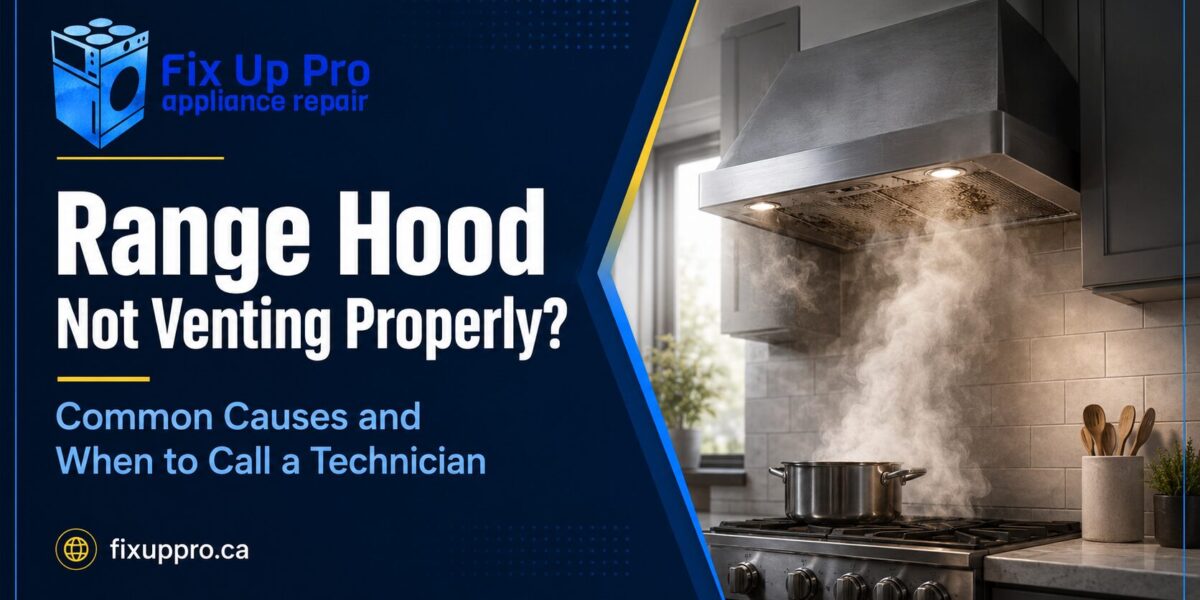
You turn on the range hood while frying or boiling something, and the smoke, steam, or cooking smell just lingers. The fan sounds like it’s running — air might even be moving a little — but nowhere near what it used to pull. It’s easy to write off as normal wear, but a range hood that isn’t venting properly is usually a sign of something specific, and most causes are quick to diagnose.
We see this a lot in Winnipeg kitchens, especially in homes where the filters haven’t been cleaned in a while or the ductwork hasn’t been checked since installation. Here’s what’s typically going on.
Quick answer: why is my range hood not venting properly?
The most common cause is a grease-clogged filter restricting airflow, followed by a worn-out fan motor, damaged or blocked ductwork, or a failing switch. Cleaning the filters solves the problem more often than people expect — if that doesn’t help, the issue is likely mechanical or electrical and worth a proper diagnosis.
Signs your range hood needs attention
- Smoke or steam lingers in the kitchen instead of clearing
- Fan sounds normal, but the airflow feels weak
- A grease smell persists even after cooking is done
- Buzzing, rattling, or grinding noise from the motor
- Fan turns on but doesn’t seem to pull air at all
What’s actually causing it
Grease-clogged filters
Mesh or baffle filters trap grease as air passes through them, and over time that buildup chokes off airflow before it ever reaches the fan. This is by far the most common cause of weak venting — and the easiest to fix yourself.
A worn or failing motor
Range hoods run for years without issue, but the motor bearings and fan blades wear down with heavy use. A struggling motor may spin slower, hum louder, or eventually stop moving meaningful airflow altogether.
Blocked or damaged ductwork
Whether your hood vents outside through a wall or roof cap, ductwork can get crushed during a renovation, clogged with accumulated grease, or blocked by debris and nesting at the exterior vent. A hood can run perfectly and still fail to clear the air if the duct itself is the bottleneck.
A faulty switch
If the fan runs at a reduced speed or doesn’t respond properly to different settings, a failing switch is often behind it — similar to the kind of electrical wear that affects speed controls on other kitchen appliances.
What you can check yourself
- Remove and clean the filters — most metal mesh filters can be soaked in hot, soapy water or run through the dishwasher
- Check the exterior vent cap for blockages, debris, or nesting
- Confirm the ductwork hasn’t been pinched behind cabinetry or during a past renovation
- Listen for motor noise that suggests wear rather than a simple clog
When to call a technician
If cleaning the filters and checking the exterior vent doesn’t restore airflow, the issue is likely inside the motor housing or ductwork — not something to keep testing on your own, especially with the fan’s wiring involved.
Our range hood repair service covers diagnosis and repair for all major brands across Winnipeg. If you’d rather have a technician take a look right away, you can book a diagnostic appointment online.
Frequently asked questions
How often should I clean my range hood filters?
Every 1–2 months with regular cooking, more often if you fry frequently or cook with a lot of oil. A clogged filter is the single most common reason for weak airflow.
Can I clean range hood filters myself?
Yes — most metal mesh filters can be soaked in hot, soapy water or run through the dishwasher. Charcoal or carbon filters, used in ductless hoods, can’t be washed and need to be replaced periodically instead.
Why does my range hood make noise but not pull air?
This usually points to a worn motor or a blockage further down the ductwork — the fan is running, but something is preventing it from moving air efficiently.
Is a weak range hood a fire risk?
Weak venting on its own won’t start a fire, but grease buildup in the filters and ductwork is flammable and a genuine hazard if left unaddressed for a long time — one more reason not to ignore persistent weak airflow.